
On-Grid Solar System – Power Your Home, Export the Rest
What is an On-Grid Solar System?
An On-Grid Solar System works together with the main electricity grid and does not operate independently.
When sunlight falls on your solar panels, they generate DC electricity, and the inverter converts it into AC electricity, which your home can use.
If your solar system produces more electricity than you need, the extra power is sent back to the grid through a bidirectional (net) meter, giving you unit credits.
When your system produces less electricity (such as at night or during cloudy weather), you automatically use electricity from the grid as usual.
It is a smooth and automatic process — the system supplies power to the grid when it produces more, and takes power from the grid when it produces less.
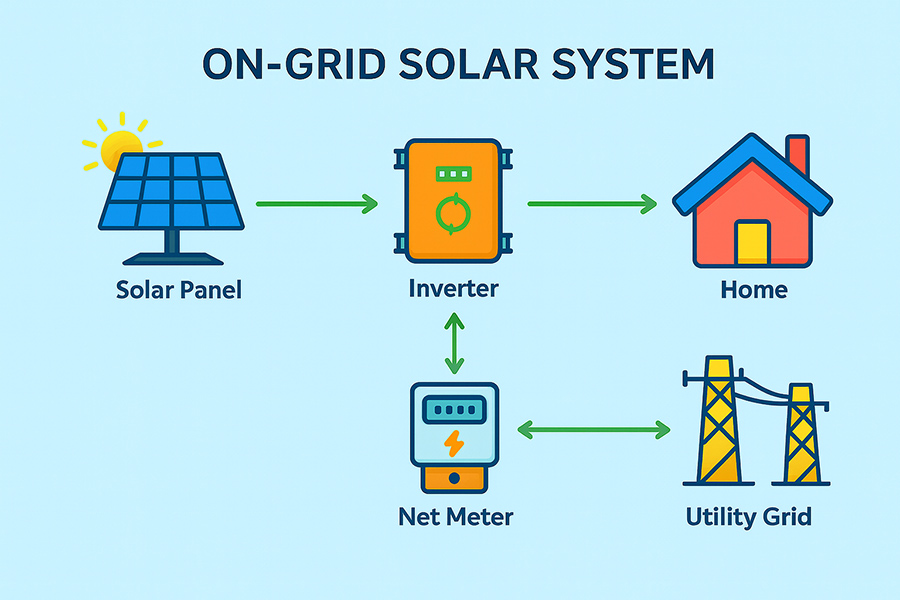
Key Components of the System
Solar Panels
Installed on your roof (usually south-facing), absorb sunlight and convert it to DC
On-Grid Inverter
Converts the DC from the panels into AC compatible with your home and the grid
Balance Of Supply
weather-resistant frameworks, DC & AC cables, combiner boxes, earthing, connectors, lightning protection
Bidirectional (Net) Meter
Records electricity imported from the grid and exported by your solar system, enabling credits for surplus generation
Key Features & Benefits
No Batteries Needed
Unlike off‑grid systems, on‑grid setups do not include batteries, which lowers upfront costs.
Net Metering Available
Surplus electricity fed back to the grid earns you credits on your bill. Unused credits at the end of the settlement year (April to March) are settled.
Subsidies from Governments
UP homeowners can get up to ₹1,08,000 lakh for solar panels — ₹78,000 from PM Surya Ghar and ₹30,000 from the state.
Cost Savings and Payback
A 3 kW solar system costs ₹1.7–1.9 lakh, but after subsidy it comes down to ₹62000–82000. It generates ~4,300 kWh/year and recovers its cost in less than 2 years.
Long system life (25+ years)
The system delivers long-lasting performance (25+ years) with correct installation and timely maintenance.
Low upfront costs
On-grid systems are the most cost-effective option, with lower installation expenses compared to off-grid and hybrid alternatives.